

I’ve always believed that the practice of law is about more than just statutes and precedents. It’s about people. It’s about understanding the human stories behind the legal issues, the anxieties and hopes that drive our clients to seek our help. Have you ever stopped to consider how powerful empathy can be in the legal profession? It’s not just about understanding someone’s situation logically; it’s about connecting with them on an emotional level, truly feeling what they’re going through. In today’s increasingly complex legal landscape, empathy is no longer a “nice-to-have” but a “must-have” for lawyers seeking to provide truly client-centered solutions. Empathetic legal counsel goes beyond simply representing a client; it’s about advocating for them as a whole person, understanding their emotional landscape, and tailoring legal strategies that address not only their legal needs but also their emotional well-being.
The Power of Emotional Intelligence in Law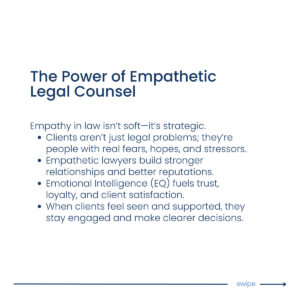
My friends and mentors Ken Hardison, Chris Mullins, and Harlan Schillinger taught me that an acceptable win rate is 92% of qualified leads or better. What does that tell you about understanding clients’ needs? Emotional intelligence (EQ) is the cornerstone of empathetic legal counsel. It’s the ability to recognize, understand, and manage our own emotions, as well as the emotions of others. In the legal profession, high EQ translates to lawyers who can effectively navigate the emotional currents of client interactions, building trust and rapport even in the most challenging circumstances.
Imagine a scenario where, instead of sifting through spreadsheets or reports, you could simply interact with your AI-powered tools through natural language. It allows you to build stronger client relationships by actively listening, demonstrating genuine concern, and responding to client needs with sensitivity and understanding. This isn’t about being a therapist; it’s about being a human being first and a lawyer second.
Understanding Client Needs Beyond the Surface
Effective legal representation starts with truly understanding your client. This goes beyond the facts of the case; it involves delving deeper into the client’s emotional state, their fears, their hopes, and their long-term goals. What truly matters to them, including what keeps them up at night and defines a successful outcome? Asking these questions, and truly listening to the answers, helps you paint a more complete picture of the client’s needs and enables you to tailor your legal strategy accordingly.
For example, I can understand why you’d feel that way. This simple phrase can resonate deeply, showing clients that your firm cares about them as individuals, not just as cases. It’s important to show that you truly understand what they’re going through—beyond just the legal aspects—and that their feelings are valid. When clients see that you genuinely care about their well-being and are invested in their emotional experience, it can make a profound difference in the relationship.
In practical terms, this could mean taking the time to get to know the person behind the case. A lawyer who asks their client questions about their personal motivations, who listens attentively without rushing to conclusions, can gain valuable insights. This will not only help in framing the case but also provide a perspective that could be the key to resolving disputes more effectively. Clients are far more likely to follow your lead when they feel understood, respected, and cared for.
 Building Trust Through Empathy
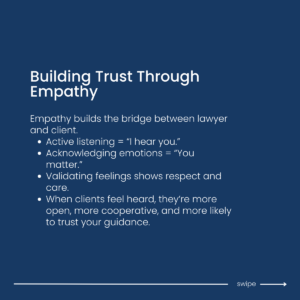
Trust is the foundation of any strong attorney-client relationship. Clients need to feel confident that their lawyer not only understands their legal situation but also cares about their well-being. Empathetic communication plays a vital role by actively listening, validating emotions, and maintaining clear and honest communication throughout the legal process.
When clients feel heard and supported, they are more likely to trust their attorney’s judgment and follow their advice. This trust is crucial, especially when legal matters involve life-changing decisions. Emotional support helps clients feel more secure in accepting difficult advice, knowing their lawyer truly has their best interests in mind.
Empathy is more than recognizing emotions. It involves actively engaging with those feelings and understanding the emotional stakes involved. For instance, a client recovering from trauma needs more than just legal steps. An empathetic lawyer takes time to acknowledge the emotional burden and offers reassurance. This kind of support not only improves emotional well-being but also helps clients make better decisions during the legal process.
I remember when we first began discussing data. It happened around the time my teenagers got their first cell phones. While it may seem unrelated, that moment highlighted how emotional intelligence helps us adapt to change, even with technology. Personal connections like this show the importance of understanding people beyond their roles.
By connecting with clients on a human level and acknowledging both their emotions and concerns, lawyers can build deeper relationships. This level of trust benefits both the client and the attorney, making the legal journey more effective and supportive.
The Role of Emotional Intelligence in Decision-Making 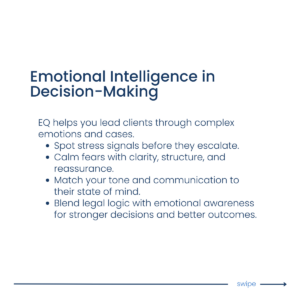
Emotional intelligence also plays a crucial role in how lawyers make decisions. The ability to accurately read a client’s emotional state and anticipate how they may react to certain advice or situations can guide lawyers in making more informed, compassionate decisions.
For example, a lawyer with high EQ will understand the anxiety a client may feel about an upcoming court date. Instead of glossing over the client’s fears, the lawyer would take time to reassure the client, acknowledge their concerns, and provide clear, actionable steps to manage their stress. The lawyer’s ability to manage their own emotions—remaining calm, confident, and focused—also allows them to guide the client through stressful situations without adding to the client’s anxiety.
In high-stress legal scenarios, such as contentious negotiations or litigation, a lawyer’s emotional intelligence becomes even more crucial. Understanding how to handle the emotional dynamics of the situation—whether it’s diffusing a tense confrontation with opposing counsel or understanding a client’s fluctuating emotions—can make a huge difference in the outcome. High EQ lawyers will know when to push forward, when to back off, and when to employ various strategies to create the best possible outcome, not just legally but emotionally.
Moreover, by demonstrating empathy and emotional understanding, lawyers can help clients manage their own emotional states. For instance, a client might have unrealistic expectations about the outcome of a case. Instead of dismissing these expectations, an emotionally intelligent lawyer will help the client reframe their expectations in a constructive way, while providing the emotional support necessary to keep them grounded throughout the process.
Creating Stronger Connections with Clients
One of the most significant benefits of emotional intelligence is its ability to foster stronger connections between lawyers and their clients. As clients navigate the often stressful and confusing legal system, they need more than just a legal expert—they need a guide who will not only help them understand the law but also support them through the emotional rollercoaster that accompanies legal issues.
By demonstrating high emotional intelligence, lawyers can build rapport with clients, making them feel seen and heard. This emotional connection can enhance communication, which is vital in ensuring that clients fully understand their legal options and the potential consequences of each choice. It also creates an atmosphere where clients are more likely to ask questions and express concerns, leading to a better, more collaborative lawyer-client relationship.
The impact of emotional intelligence can be seen in various legal practices. For example, in family law, emotional intelligence can be a game-changer when navigating sensitive issues like divorce or child custody. Clients dealing with personal turmoil need more than just legal advice—they need empathy and emotional support. An emotionally intelligent lawyer can help them navigate the legal process while providing reassurance that their emotional well-being is also a priority.
Even in commercial or corporate law, where emotions may seem less prominent, emotional intelligence still plays an essential role. Clients may be dealing with high-pressure situations, such as mergers, acquisitions, or disputes with business partners. In these contexts, a lawyer’s ability to manage emotions can ensure smooth negotiations, prevent misunderstandings, and lead to more successful outcomes.
Developing Emotional Intelligence as a Lawyer
Developing emotional intelligence is not an innate skill for many lawyers—it’s something that can be honed over time with practice and self-awareness. For those in the legal profession, the first step is becoming aware of one’s own emotional state and how it impacts interactions with clients. Lawyers must work on understanding their own triggers, emotional responses, and how they can control them in high-pressure situations.
Another critical component of emotional intelligence in law is the ability to read and understand the emotions of others. This requires not only careful listening but also observing non-verbal cues—such as body language, facial expressions, and tone of voice—that reveal what clients may be experiencing. By practicing these skills, lawyers can become more attuned to their clients’ needs, responding in a way that is both appropriate and supportive.
Moreover, emotional intelligence involves managing relationships in a way that fosters trust, respect, and understanding. Lawyers must be able to navigate complex relationships with clients, colleagues, and opposing counsel, all while maintaining professionalism and emotional composure. This skill is vital in building long-term relationships that extend beyond just one case.

Tailoring Legal Strategies with Empathy
Empathy is an essential tool in tailoring legal strategies that are not only effective but also deeply aligned with the emotional and personal needs of clients. It goes beyond understanding the legal facts of a case to truly grasp the human side of the situation, including the emotions, hopes, fears, and personal goals that drive the client. By incorporating empathy into your practice, you can create solutions that resonate on a deeper level, ensuring that clients feel heard and supported throughout the legal process.
When you understand your client’s needs and motivations, you can craft legal strategies that are not only legally sound but also reflect their personal values. In divorce cases, for example, clients are often experiencing emotional upheaval. By identifying their priorities, such as fair custody, financial stability, or reduced conflict, you can shape your approach to meet their specific needs. This may involve choosing mediation or collaborative law, both of which focus on cooperation and resolution rather than confrontation. These methods can be less emotionally exhausting and lead to more satisfying outcomes, even when the result is not ideal.
In business law, empathy is equally valuable. If a client is in a dispute with a partner, understanding emotional motivations can inform better strategies. A client may value reputation or long-term relationships over short-term financial gain. Recognizing this allows you to explore solutions that honor those values, such as alternative dispute resolution or carefully crafted agreements that go beyond the basic legal requirements.
Building Emotionally Aware and Client-Centered Solutions
Empathy allows for a more holistic and thoughtful approach to legal solutions. It means considering the emotional consequences of legal decisions and helping clients navigate those impacts with care. This might include adding privacy clauses in sensitive cases or acknowledging trauma and emotional history in agreements. In family law, you could include language that prioritizes a child’s emotional well-being or acknowledges the emotional difficulty of a separation. These elements show clients that their experiences are understood and respected.
When lawyers view cases through an empathetic lens, they are better positioned to create solutions that serve both legal and emotional needs. This mindset opens up new possibilities that go beyond standard legal responses. It encourages creative thinking and leads to outcomes that clients feel more satisfied with, even in difficult circumstances.
Empathy also strengthens the client-lawyer relationship. By focusing on the client’s broader concerns, values, and goals, you foster trust and build lasting connections. The client feels supported and understood, and the lawyer gains a deeper sense of purpose and fulfillment in their work.
A legal strategy built with empathy is not just about solving a problem. It is about crafting a thoughtful and meaningful path forward, one that honors both the legal and human elements of every case.
The Benefits of Empathetic Legal Counsel
The practice of empathy in legal counseling offers meaningful benefits for both clients and lawyers. For clients, the most immediate impact is the sense of being genuinely understood. When lawyers show they care about a client’s emotional well-being, it builds trust and helps clients feel more at ease with the legal process. This creates a stronger attorney-client relationship and encourages clients to share concerns openly, providing the lawyer with the full context needed to work effectively.
Empathy is especially valuable in emotionally charged cases, such as family disputes or criminal defense. Clients facing these challenges are not only seeking legal expertise but also emotional support. A lawyer who acknowledges the human side of the case builds deeper trust and shows genuine investment in the client’s overall well-being.
Clients who feel heard and supported are more likely to be satisfied, even if the legal outcome is uncertain. This satisfaction often leads to loyalty and referrals, which are essential for growing a legal practice. A reputation for empathy helps attorneys stand out, showing they care about more than just the case.
For lawyers, empathy can bring greater job satisfaction and reduce burnout. The emotional demands of legal work can be intense, especially in high-stress areas. Practicing empathy allows lawyers to find purpose in their work by connecting with the human stories behind the legal issues. This deeper engagement can be both motivating and fulfilling.
Empathy also leads to smoother cases. When clients feel supported, they tend to cooperate and communicate more openly. This reduces stress for lawyers and creates a positive cycle of mutual respect, better outcomes, and a more sustainable legal career.
Investing in Empathy and Continuous Improvement
To truly incorporate empathy into your legal practice, it is important to build systems that support empathetic communication and client-centered care. This begins with hiring attorneys and staff who not only bring strong professional skills but also show a natural ability to empathize. Empathy involves more than listening or offering reassurance. It requires an understanding of human behavior, emotions, and motivations, and applying that understanding throughout the legal process. Hiring and training emotionally intelligent professionals ensures that empathy becomes part of every client interaction.
Training and development also play a key role. Programs focused on active listening, emotional awareness, and conflict resolution can help lawyers and staff enhance their ability to relate to clients and handle emotionally complex situations. Ongoing development in these areas supports a client-centered culture where empathy is practiced consistently.
From my own experience designing lessons to fill knowledge gaps based on feedback, I saw how valuable it is to adapt and improve over time. Regularly reviewing your approach to client care and asking for feedback ensures your empathy-based strategies continue to evolve. This kind of mindset promotes a culture of continuous improvement and a consistent focus on delivering exceptional client service.
Ultimately, weaving empathy into legal practice benefits not only the client but also the legal professional. Addressing emotional needs leads to legal strategies that resonate more deeply and produce better outcomes. The result is stronger client relationships, increased job satisfaction, and a stronger reputation. Empathy should not be seen as optional; it is a vital part of building a successful and sustainable legal career.
Practical Tips for Cultivating Empathy in Legal Practice:
- Active Listening: Pay close attention to what your client is saying, both verbally and nonverbally. Ask clarifying questions and reflect back what you hear to ensure understanding.
- Emotional Validation: Acknowledge and validate your client’s emotions, even if you don’t necessarily agree with them. Let them know that their feelings are legitimate and understandable.
- Perspective-Taking: Try to see the situation from your client’s point of view. Consider their background, experiences, and values.
- Self-Awareness: Be mindful of your own emotions and how they might be influencing your interactions with clients.
- Continuous Learning: Seek out opportunities to enhance your emotional intelligence through reading, workshops, or coaching.
Final words
In a world that often feels increasingly impersonal, empathy is a powerful tool for lawyers to connect with clients on a deeper level and provide truly client-centered legal solutions. By embracing emotional intelligence and practicing empathetic communication, lawyers can build stronger client relationships, foster trust, and achieve more effective outcomes. Empathetic legal counsel is not just about winning cases; it’s about helping clients navigate challenging times with dignity and support, ensuring that they feel heard, understood, and empowered throughout the legal process. Remember, legal expertise is essential, but it’s empathy that truly sets exceptional lawyers apart.